Volatility Indicator
Deeper Insight into Market Activity & Volatility Trends
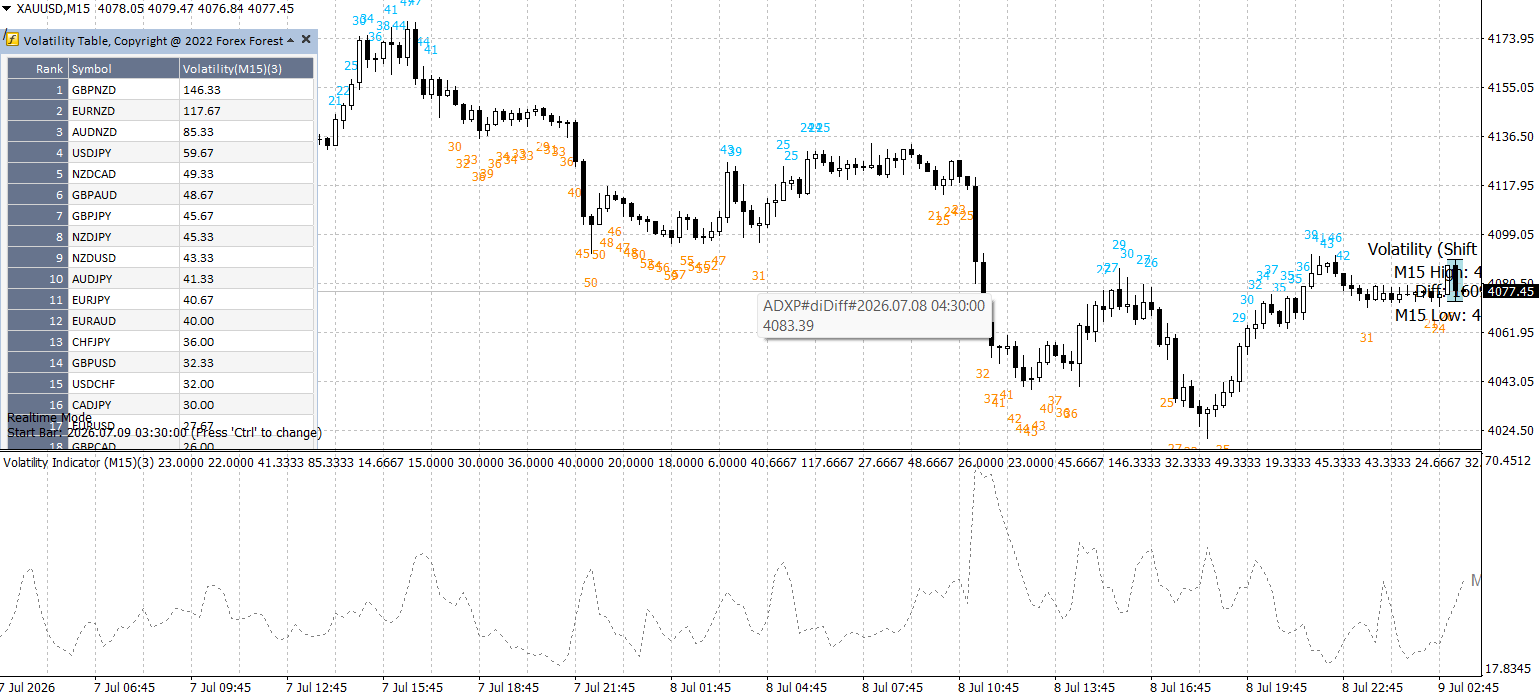
The Volatility Indicator builds on the foundation of the Volatility Table by providing deeper, chart-level insight into how volatility is formed and evolving over time. Instead of showing just a single value, it helps traders understand the structure, context, and direction of market volatility.
Key Features
- Bar-Level Volatility Breakdown
- Displays which specific price bars contributed to the current volatility reading—giving traders clear visibility into where market movement is coming from.
- Volatility Trend Analysis
- Goes beyond static values by showing whether volatility is increasing or decreasing, helping traders identify shifting market conditions.
- Relative Volatility Comparison
- Compares current volatility against an adjustable historical average, allowing traders to assess whether the market is:
- Expanding (high activity)
- Contracting (low activity)
- Indicator Window Visualization
- Provides a structured visual view of volatility behavior, making it easier to interpret volatility cycles and regimes.
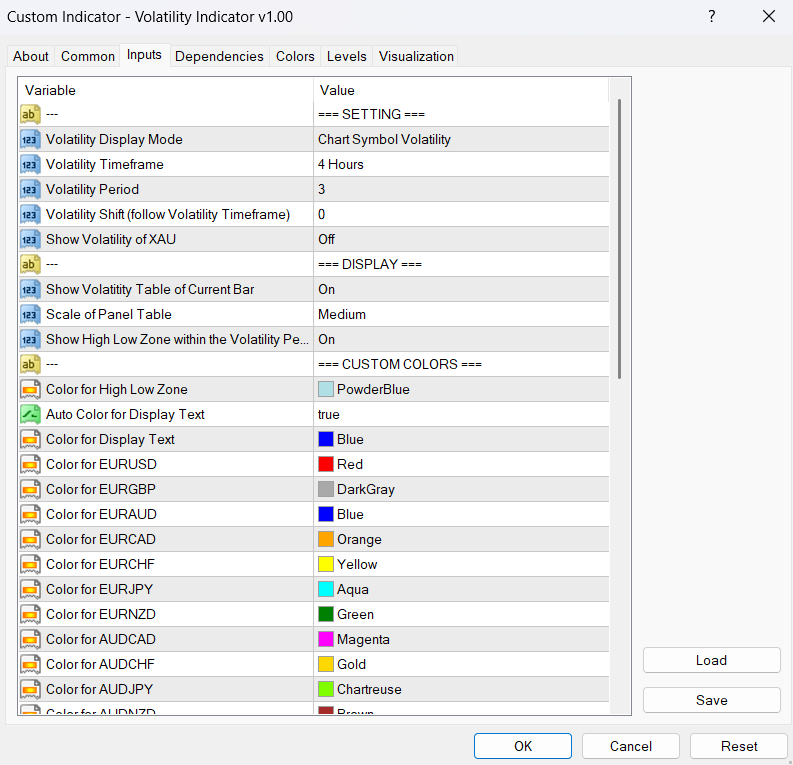
- Fully Customisable Settings
- Retains all core settings from the Volatility Table, including timeframe, period, and calculation parameters for flexible use across strategies.
How It Works
The Volatility Indicator measures price movement over a defined period and breaks it down into two key components:
- Source of Movement – highlights the bars driving volatility
- Trend of Volatility – shows whether activity is building up or slowing down
By combining these, traders can better understand not just how much the market is moving—but also how and why it is moving.
Why It Matters
Volatility is not constant—it shifts between expansion and contraction phases.
Understanding these phases allows traders to:
- Adapt strategies to current market conditions
- Avoid trading during low-movement periods
- Identify potential breakout or reversal environments
Best For
Traders who want to:
- Understand volatility beyond a single number
- Identify changing market conditions early
- Confirm whether moves are significant or temporary
- Align strategies with volatility cycles

 How to install MT4
2 × USD0.00
How to install MT4
2 × USD0.00  MTF ATR
1 × USD19.90
MTF ATR
1 × USD19.90  CCY Power Trend 9 Pro
1 × USD599.00
CCY Power Trend 9 Pro
1 × USD599.00 



Reviews
There are no reviews yet