0
USD0.00
0 items
Member Login


The price of silver is one of the most volatile assets in global financial markets. Driven by shifting supply and demand, changing market sentiment, and geopolitical developments, silver often experiences dramatic price movements. In some market cycles, silver has surged over 300% within a single year. Yet during periods of panic, it can also collapse more than 30% in a single trading day. This level of volatility leaves many investors asking an important question: Is the silver market heading toward a speculative bubble — or the beginning of a major long-term bull market? Recently, global attention has shifted toward the world’s largest precious metals futures exchange: COMEX. According to research from the Silver Institute, the silver market has experienced recurring supply deficits in recent years as industrial demand continues to rise faster than global silver production.
If you want to learn more about this, watch the video above where we explain in-depth on the COMEX Silver.
Recent market data reveals a striking imbalance between paper silver contracts and physical silver reserves. At one point in January, the amount of deliverable silver in COMEX vaults dropped to approximately 30 million ounces. At the same time, open interest in silver futures exceeded 500 million ounces. This means that paper claims on silver were roughly 16 times larger than the available physical supply. If a significant number of futures holders demand physical delivery of silver, the exchange could face severe pressure to meet those obligations. Such a scenario could trigger a liquidity crisis across commodity markets, similar to historical short squeezes seen in precious metals. While exchanges have mechanisms to prevent market breakdowns, the current imbalance highlights a deeper issue: The global silver supply chain is tightening.
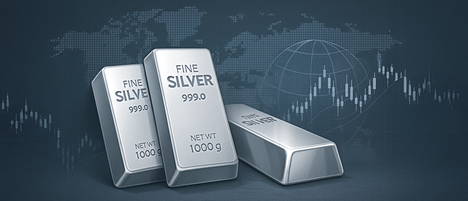
Silver has historically served as both a store of value and a monetary metal, but today its importance goes far beyond investment demand. Silver possesses the highest electrical conductivity of any metal, making it critical for modern technologies.
Industries that rely heavily on silver include:
Because of these applications, many analysts now refer to silver as the “industrial blood” of the digital economy. This growing industrial demand is reshaping the global supply and demand balance for silver. As AI infrastructure, renewable energy, and electric vehicles scale globally, analysts believe the market could face a persistent silver supply deficit, potentially pushing the future price of silver significantly higher.
A major turning point for the silver market occurred when China introduced a new silver export licensing system starting January 1. Under this policy, companies must obtain government approval to export silver, effectively elevating silver to the status of a strategic national resource. Without an export license, silver cannot leave the country.
This policy has significant global implications because China:
If export restrictions remain in place, global markets may face persistent silver supply shortages. Such policies also contribute to increased price volatility between international trading hubs.
Under normal market conditions, traders perform arbitrage trading to equalize prices between exchanges.
For example:
Typically, the price difference between major silver trading hubs stays within $1–$3 per ounce. However, a highly unusual situation recently occurred. The silver price on the Shanghai Gold Exchange traded more than $11 higher than COMEX. Within weeks, the premium expanded to nearly $20 per ounce. Such a large gap suggests that physical silver could not easily move between markets, likely due to supply constraints and export restrictions. When arbitrage breaks down, markets become less efficient and more volatile, which often leads to dramatic price swings.
Many investors assume gold is the rarest precious metal. However, the reality may surprise many market participants. Throughout human history, approximately 210,000–220,000 tons of gold have been mined. Most of that gold still exists today, stored in central bank vaults or private holdings.
Silver has a different story. Historically, about 1.74 million tons of silver have been mined, which is roughly eight times the amount of gold. However, unlike gold, silver is heavily used in industrial production.
An estimated 30–50% of all silver ever mined has been permanently consumed in products such as:
Recovering silver from these products is often more expensive than the metal itself, meaning much of it never returns to the market. Many traders monitor XAGUSD price movements closely because silver often reacts strongly to macroeconomic shifts and commodity demand cycles. This makes accessible silver supply far more limited than historical production numbers suggest.
The silver market faces three structural limitations that make increasing supply extremely difficult.
Over the past decade, ore grades in the world’s largest silver mines have declined nearly 40%. High-quality deposits are becoming increasingly rare. Lower ore grades mean higher production costs and lower output efficiency.
Unlike gold, most silver is not mined directly.
Approximately 70–80% of global silver production comes as a by-product of mining other metals such as:
This means silver production cannot easily increase unless those metals also experience strong demand.
Even when mining companies decide to develop new silver projects, the process can take 7–10 years before production begins. This long timeline means supply cannot respond quickly to rising demand. As a result, silver markets often experience extended periods of supply shortages.
Demand for silver is rising rapidly among technology manufacturers.
Companies like Apple, Tesla, and Samsung rely heavily on silver for their supply chains.
Some reports suggest Chinese buyers are already paying $8–$10 premiums directly to mining companies to secure silver.
If supply pressures increase further, major technology companies may consider vertical integration strategies, including:
Such moves could further tighten global supply and increase price volatility.
Some analysts warn that the silver market may soon face a critical stress test.
If more than 20% of COMEX futures holders demand physical delivery, the exchange may struggle to fulfill those obligations.
In such cases, exchanges typically implement emergency measures, such as:
Similar interventions occurred during the Silver Thursday, when the Hunt brothers attempted to corner the silver market. While such policies can stabilize markets temporarily, they may also trigger massive volatility in silver prices.
Extreme market conditions often create trading opportunities.
However, manual trading during high volatility can be challenging due to emotional decision-making and rapid price movements.
This is why many traders now use algorithmic trading strategies to capture short-term market momentum. Understanding which silver trading strategy works for you is important.
For example, breakout-based algorithms identify:
Once a breakout occurs, the system can automatically execute Buy Stop or Sell Stop orders.
This allows traders to participate in XAGUSD trading while maintaining strict risk management rules.
At Algo Forest, traders can access AI Signals Page that tracks real trading performance across multiple strategies including algorithmic trading silver strategies.
The platform allows traders to:
Many traders use algorithmic systems to trade gold (XAUUSD) and silver (XAGUSD) simultaneously, capturing opportunities in both precious metals markets.
While no strategy guarantees profits, systematic trading helps traders maintain discipline and reduce emotional bias.
The future of silver prices will likely depend on several key factors:
Rising demand from AI, renewable energy, and electric vehicles could significantly increase silver consumption.
Export restrictions and supply chain tensions could limit global silver availability.
Silver often performs well during periods of currency debasement and inflationary pressure.
If physical demand exceeds supply, silver prices could experience sharp upward movements.
Silver is entering a new phase in global markets.
Unlike previous cycles driven mainly by investment demand, the next silver bull market may be powered by industrial demand from the technology revolution.
With tightening supply chains, growing demand from emerging industries, and potential structural stress in futures markets, silver could become one of the most strategically important commodities of the coming decade.
For traders and investors alike, understanding these dynamics may be critical in navigating the next phase of the precious metals market. Find our expert advisors here to understand how to trade gold or silver, our systems are designed to help you identify the best opportunities with your ideal risk management.
The global silver supply deficit is driven by rising industrial demand, limited new mining supply, and declining ore grades.
The price of silver is primarily influenced by supply and demand, industrial consumption, interest rates, and market sentiment.
The spot price reflects the real-time market value of silver and helps traders identify short-term trading opportunities.
*This article is intended for educational purposes and does not constitute investment advice.