
0
USD0.00
0 items
Member Login


When you think of investing legends, Warren Buffett’s name often comes first. His steady 20% annual return has made him one of the richest men alive. But what if someone achieved 66% annual returns for over three decades—outperforming Buffett and nearly every investor in history?
That someone is Jim Simons, a mathematician turned trading genius who founded Renaissance Technologies and its legendary Medallion Fund—the most successful hedge fund ever known.
With the power of mathematics, data analysis, and algorithmic models, Simons transformed market chaos into predictable patterns—and built billions through quantitative trading.
Watch our full breakdown video here:
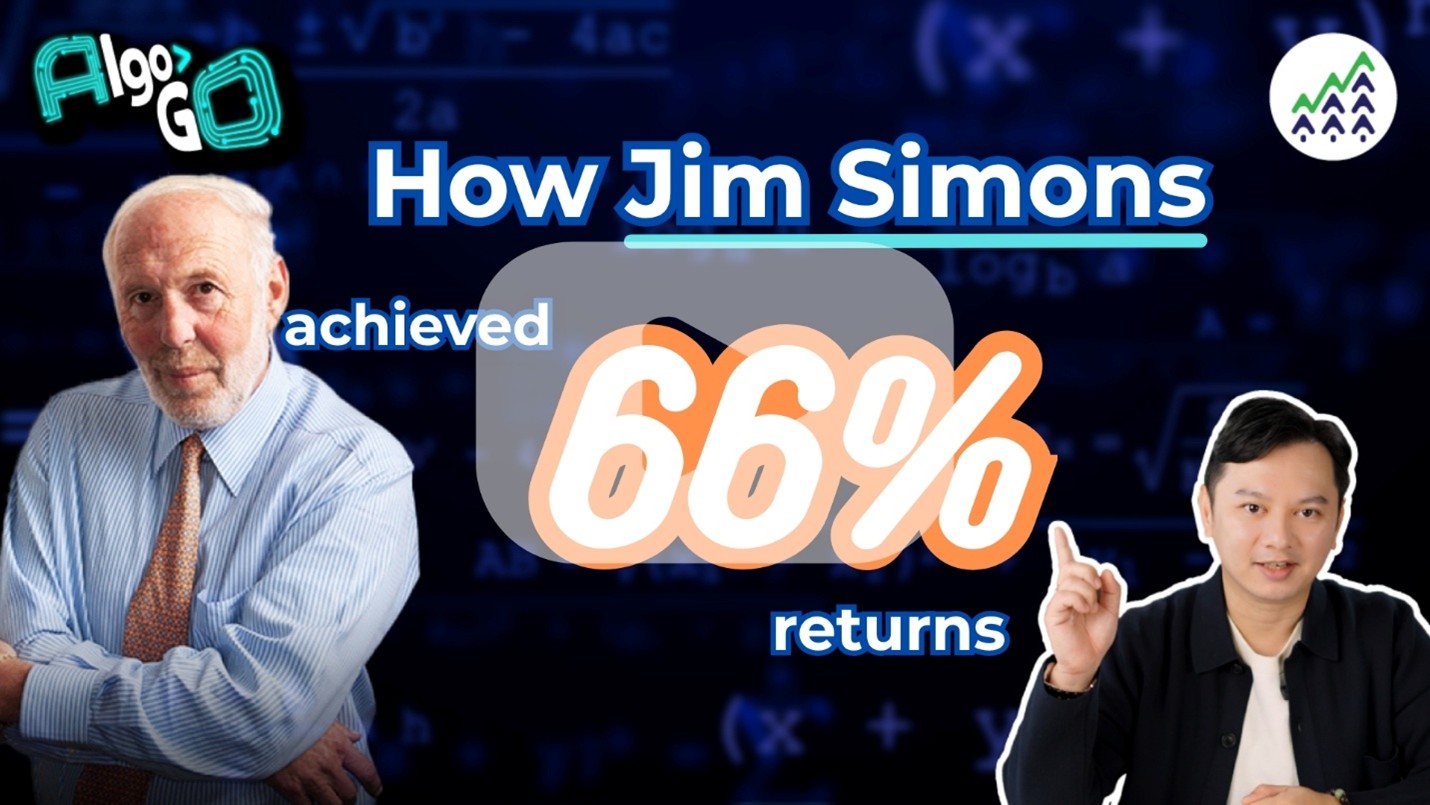
👉 Jim Simons: The Mathematician Who Outsmarted Wall Street
Tip: Turn on English captions for a better viewing experience, like the video, and follow our Forex Forest Youtube channel.
From Cold War Codebreaker to Quant Trading Pioneer
Born in 1938 to a Jewish immigrant family in the U.S., Simons showed extraordinary talent early on.
At age three, he could already compute powers like 2³² in his head.
After high school, he enrolled at MIT, then transferred to UC Berkeley, where he earned his Ph.D. in mathematics at just 23.
Not long after, he was teaching at Harvard.
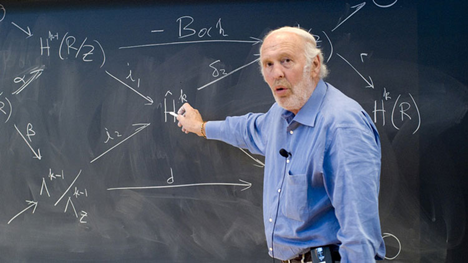
During the Cold War, Simons was recruited by the Institute for Defense Analyses (IDA) — a top-secret U.S. military think tank.
There, he became a codebreaker.
This experience of decoding hidden patterns in complex data sparked an idea:
“If you can find structure in encrypted messages, maybe you can find structure in markets.”
That insight became the seed for his future empire.
Founding Renaissance Technologies: Data over Emotion
In 1978, at age 40, Simons left academia to start Renaissance Technologies in Long Island. What if you could turn $100 into $400 million? This isn't a theoretical question—it's the legendary track record of Jim Simons' Medallion Fund, run by the secretive hedge fund. While others focused on company fundamentals and human intuition, Simons believed markets followed statistical patterns waiting to be decoded.
His team composed not of bankers from Wall Street, but mathematicians, physicists, and computer scientists and they analyzed enormous datasets, seeking recurring anomalies.
Instead of guessing “why” a price moved, they focused purely on “when” it statistically tends to move.
Simons held a core belief: financial markets are not random; they have patterns that can be decoded. This data-first mindset became the foundation of quantitative trading, a method that would later revolutionize finance.
The Power of Mean Reversion: Turning Market Noise into Profit
One of Medallion’s core concepts was mean reversion: the idea that prices tend to return to their average value after extreme highs or lows.
Imagine a swinging pendulum. No matter how far it swings, it always passes through the center again. In trading, when prices move too far from their average, they eventually “revert to the mean.”
Simons’ algorithms capitalized on this by automatically:
This “buy low, sell high” process, executed with mathematical precision, created steady, compounding returns.
Beating Human Emotion with Machines : The Search for Market Patterns
Human traders often make poor decisions based on fear or greed. Simons recognized that emotion is the biggest enemy of consistency.
Simons' initial strategy was surprisingly simple: he avoided stocks entirely. Why? The stock market was filled with too much "noise"—CEO changes, earnings reports, geopolitical events—countless unique variables that clouded human judgment.
Renaissance’s systems operated autonomously, guided only by data and code. They constantly analyzed thousands of market variables like currencies, commodities, and bonds to identify profitable opportunities invisible to the human eye. His team dug up historical data dating back to the 1800s, searching for statistical anomalies and repeatable market patterns.
His solution? Remove humans from trading entirely.
Renaissance’s systems operated autonomously, guided only by data and code. They constantly analyzed thousands of market variables like currencies, commodities, and bonds to identify profitable opportunities invisible to the human eye.
His philosophy was simple: he didn't care why a pattern existed, only that it existed.
By trusting algorithms over instinct, the Medallion Fund produced average returns exceeding 66% per year before fees. These numbers were never replicated by any other fund.
From Math Models to Passive Income
Simons proved that success in trading isn’t about luck or gut feeling. It’s about systems, data, and discipline.
Today, his legacy lives on in the rise of EA (Expert Advisor) trading systems, automated bots that execute trades 24/7, using similar mathematical logic to generate passive income.
Thanks to modern platforms like MT4 and MT5, anyone can now access this technology. Automated strategies can scan for market patterns, manage risk, and execute trades all without emotional interference.
The Secret of Compounding Growth
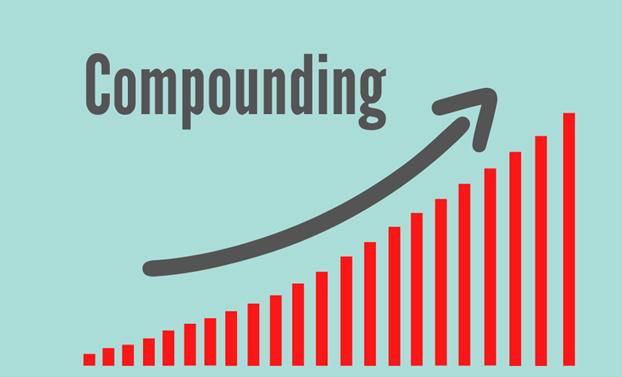
Compounding or reinvesting profits to earn returns on returns is what turns small amounts into fortunes.
At 66% annual growth, even a $100 investment could theoretically become $400 million in 30 years.
As Albert Einstein once said:
“Compound interest is the eighth wonder of the world.”
Jim Simons didn’t just believe this, he mathematically mastered it.
Want to Learn Algorithmic Trading Yourself?
If you’re inspired by Jim Simons’ story and want to explore how automated trading can help you build steady, passive income, explore on our EA products.
You’ll learn with the online learning materials :
👉 Click the link here to review how the successful students performed their outstanding investment and start your journey toward financial freedom with Algo Forest.
📺 Watch the Full Video and Subscribe for More
Ready to see Jim Simons’ story brought to life?
Watch our full video now → Jim Simons: The Mathematician Who Outsmarted Wall Street
Don’t forget to turn on English subtitles to follow along easily.
Conclusion
Jim Simons proved that markets aren’t chaos but data patterns waiting to be understood. His success wasn’t magic, it was math.
By applying quantitative logic and trusting algorithms over emotions, he showed that consistency, discipline, and automation are the keys to sustainable wealth.
Are you ready to harness the same principles and let data work for you?
If you enjoy educational videos about algorithmic trading, AI strategies, and financial freedom tips, feel free to explore the ranges of indicators and EAs that can leverage your trading performance & help you master programmatic trading and grow your passive income!